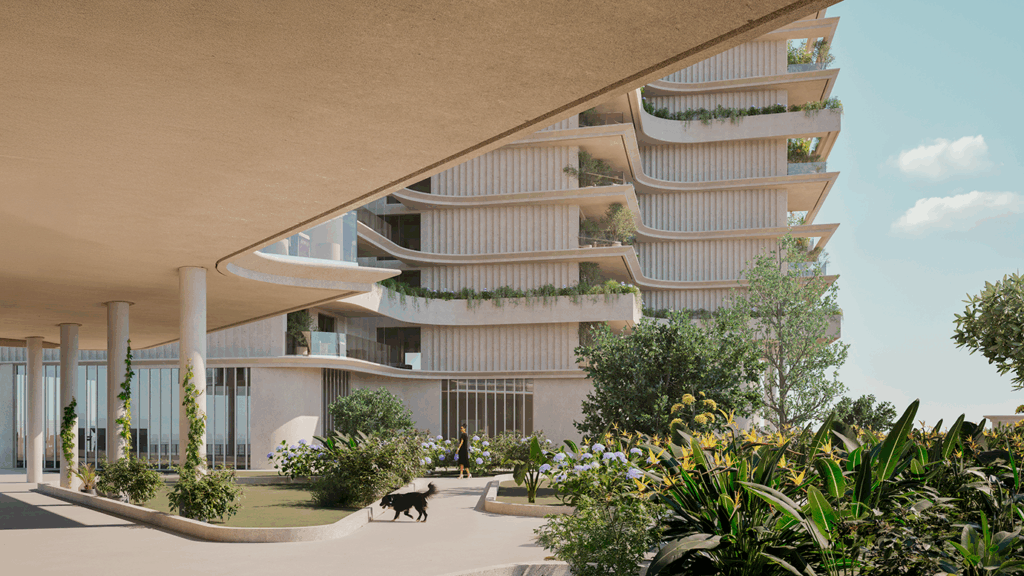
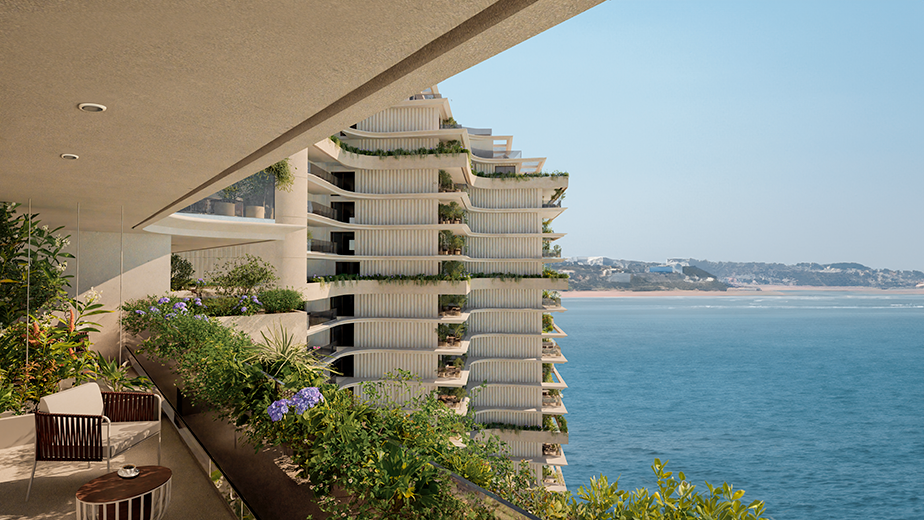
Caelya is born of a poetic conjunction: caelum, Latin for sky, and the intangible idea of water as living matter. The name becomes a metaphor for a space that aspires to touch the horizon, as though suspended between the rhythm of the waves and the vastness of the firmament.
Caelya is more than an architectural complex; it is an identity that unfolds from its own semantic roots, evoking the fluidity of the sea breeze, the undulating texture of water, and the steadfast presence of reefs as embodiments of resilience.
Its architectural language draws inspiration from this same balance of forces: a natural dialogue between softness and solidity, between what flows and what endures.
In this way, Caelya becomes a symbol of transition and contrast—a bridge between the dynamic energy of the sea and the stillness of the sky. Its architecture does not literally reproduce the landscape; instead, it interprets and elevates it, translating it into forms that stir the emotions and gaze toward the horizon with a sense of timelessness.


Located just a short distance from the coastline, on a privileged plot where the low-rise surroundings allow uninterrupted views of the sea, Caelya is conceived as a new visual landmark. Two towers engage in a bold dialogue with a pre-existing semicircular tower, together forming a striking composition that marks the landscape. Visible from over 15 kilometers away, they become more than buildings—they become signals, anchor points in the visual memory of the region.
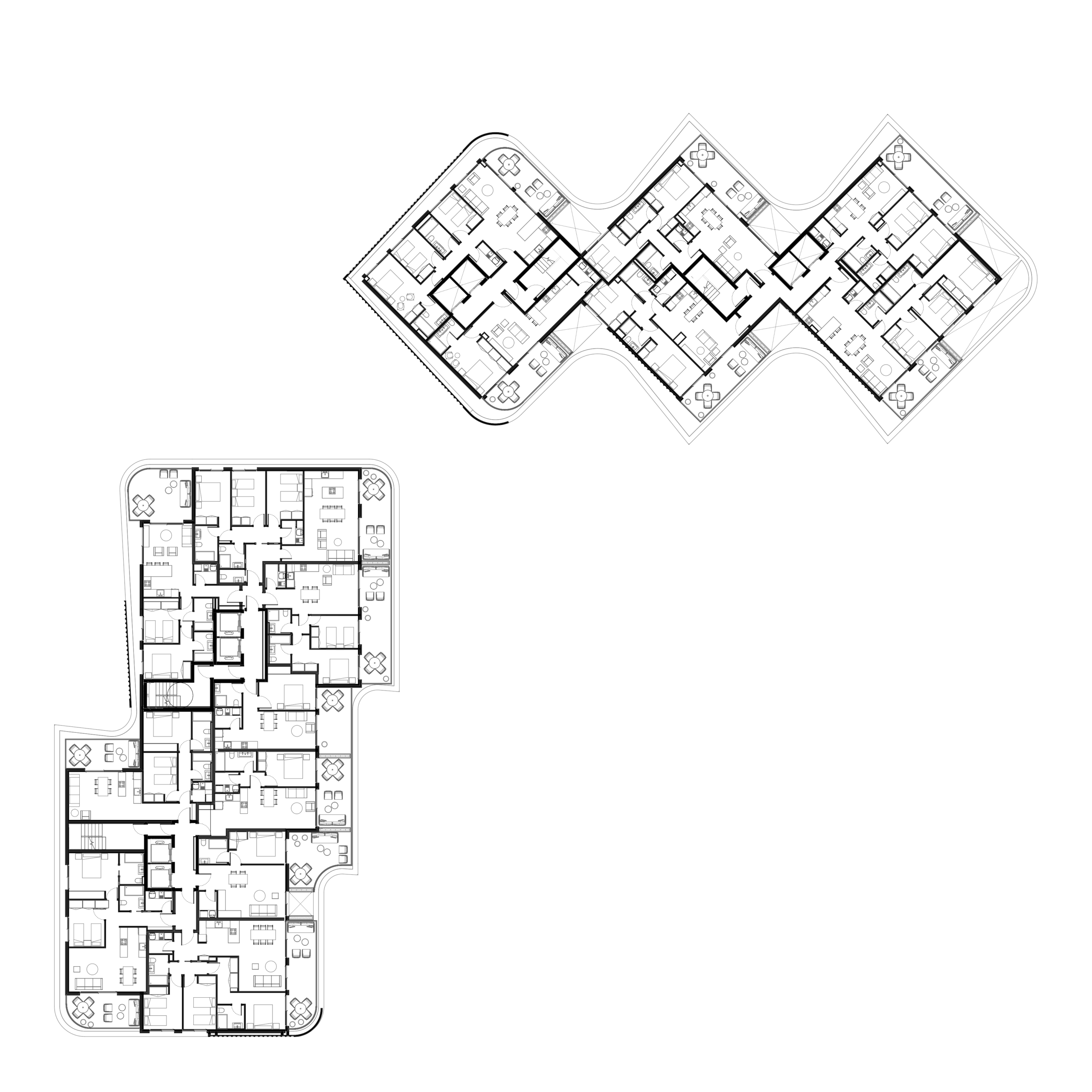
The complex’s morphology follows a clear design strategy: to avoid flatness, enhance visual connections, and ensure privacy without compromising monumentality. The towers are organized as vertical slabs, divided into three structural cores. This rational layout offers typological flexibility, efficient circulation, and natural cross-ventilation. The subtle rotation of the volumes and the selective projection of certain floors create visual variation across the façades, breaking uniformity and giving each tower its own identity.
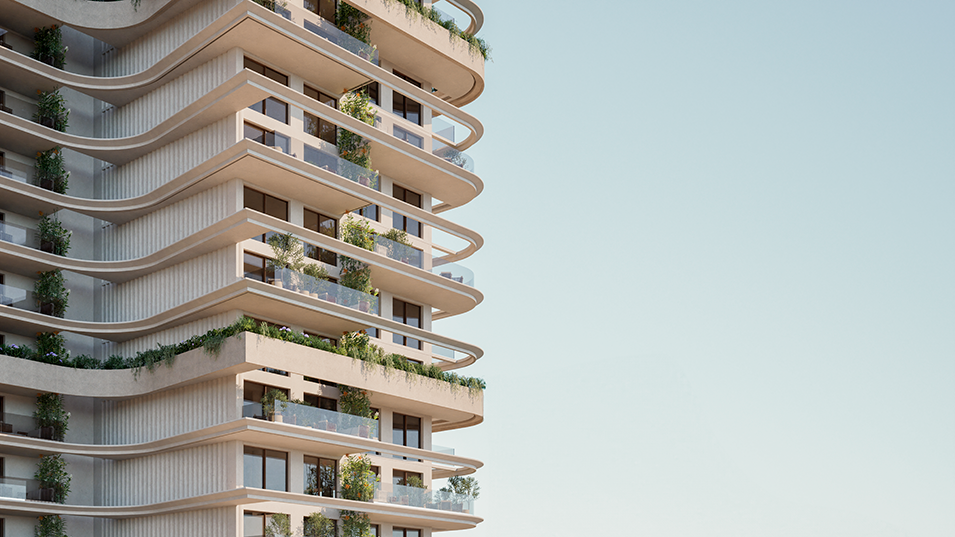
These façades act as living canvases narrating a natural phenomenon: the meeting of water and stone. At the base, forms flow softly like waves; but as they ascend, this calmness tightens, folds, transforms. Sharp lines and angular edges emerge, evoking the jagged silhouette of a reef. This progression unfolds not abruptly, but continuously—like a slow geological shift—resulting in an architecture that is alive, constantly transforming with the light, time of day, and viewer’s perspective.
Caelya is designed around the user: around how they inhabit the space and how daily experience can become a source of pleasure. The distance from the sea is not seen as a limitation, but as an opportunity. The complex is crafted to evoke the presence of the coastline through its communal spaces. Architecture becomes a sensory mediator, translating the landscape into materials, textures, pathways, and atmospheres that awaken the memory of the sea without ever needing to touch its shore.
These shared spaces are the heart of the project. Pools with relaxing areas, lush gardens, social clubs, coworking hubs, and sports facilities transform daily life into a lifestyle. The chill-out area—strategically located at the intersection of the main pathways—acts as the beating heart of the complex, a space designed for contemplation and human connection. Mediterranean vegetation, placed with both scenic and ecological intent, permeates the structures, climbs pillars, spills over rooftops, and blurs the boundaries between inside and out.
The Caelya experience is completed by a slow-living atmosphere, where natural light, wind, filtered shadows, and reflections on water create a subtle sense of well-being. Every façade, every step, every corner is designed to resonate with the landscape and with those who inhabit it. Caelya does not impose itself on its environment—it listens to it, interprets it, and reimagines it. It is architecture that is felt, remembered, and always looking toward the horizon with the quiet confidence of a place that knows exactly where it belongs.